Why are pollinators so important?
The sight of a flowering plant covered in busily buzzing bees brings joy to any gardener’s heart, and for good reason! Pollinators are essential to the health of our planet, so we need to do all we can to look after them. Here’s the lowdown on why pollinators are important and how to help them.

Why we need pollinators
Pollinators are a vital part of our food system. Without them, we wouldn’t have most of the vegetables and fruit that we eat. This includes things like courgettes, pumpkins, beans, peas, apples, pears, cherries, and strawberries – the list is almost endless. Many plants can’t produce seeds without being pollinated, so without pollinators, there would soon be nothing to eat!
What is pollination?
Before a plant can produce fruit, it needs to be pollinated. This means that pollen has to be transferred from the male part of the flower (the anther) to the female part (the stamen). Some plants, such as sweetcorn, are pollinated by the wind, which blows pollen from anthers to stamens, but most of the plants we eat are pollinated by insects that visit the flowers to collect sweet, energy-rich nectar for food. While getting to the nectar in the heart of the flower, the insects pick up pollen on their bodies, and this gets transferred to the stamens of the next flower they visit, thus pollinating the flower, which can then start to develop into a fruit.

Plants to attract pollinators
You can do your bit to help pollinators by planting pollinator-friendly flowers. In return, these helpful insects will boost your harvest by pollinating your fruit and vegetables! Single flowers (those with just one layer of petals) with open centres are better for pollinators than very full double flowers with masses of petals, as it’s easier for the pollinators to reach the nectar at their centres. There’s also evidence to suggest that bees are especially attracted to blue flowers, which tend to be rich in nectar. Umbellifers – plants with flat flowerheads – are very popular with pollinators, and they also attract other beneficial insects like hoverflies and ladybirds, which help to control aphids.

Here are a few of the many pollinator-friendly plants that will bring butterflies and bees to your garden:
- Dahlia ‘Bishop of York’ – golden yellow flowers and purple-green leaves.
- Leucanthemum x superbum ‘Snowcap’ (shasta daisy) – masses of daisy-like white flowers all summer.
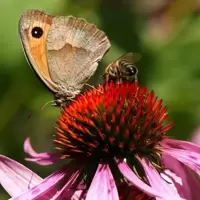
- Echinacea purpurea ‘Magnus’ (coneflower) – rich red-pink flowers with striking orange-red centres.
- Lavandula angustifolia (lavender) – fragrant purple flower spikes and aromatic grey-green leaves.
- Geranium ‘Rozanne’ – abundant blue flowers for months in summer
- Coriander – flattened flowerheads of tiny white flowers, especially popular with honeybees.
- Ammi majus (Bishop’s flower) – a gorgeous annual with lacy domes of white flowers on long stems.
Want to bring more pollinators to your garden? Visit our centre, where we have a fantastic range of pollinator-friendly plants to suit every taste!